The Side Plank Diaries
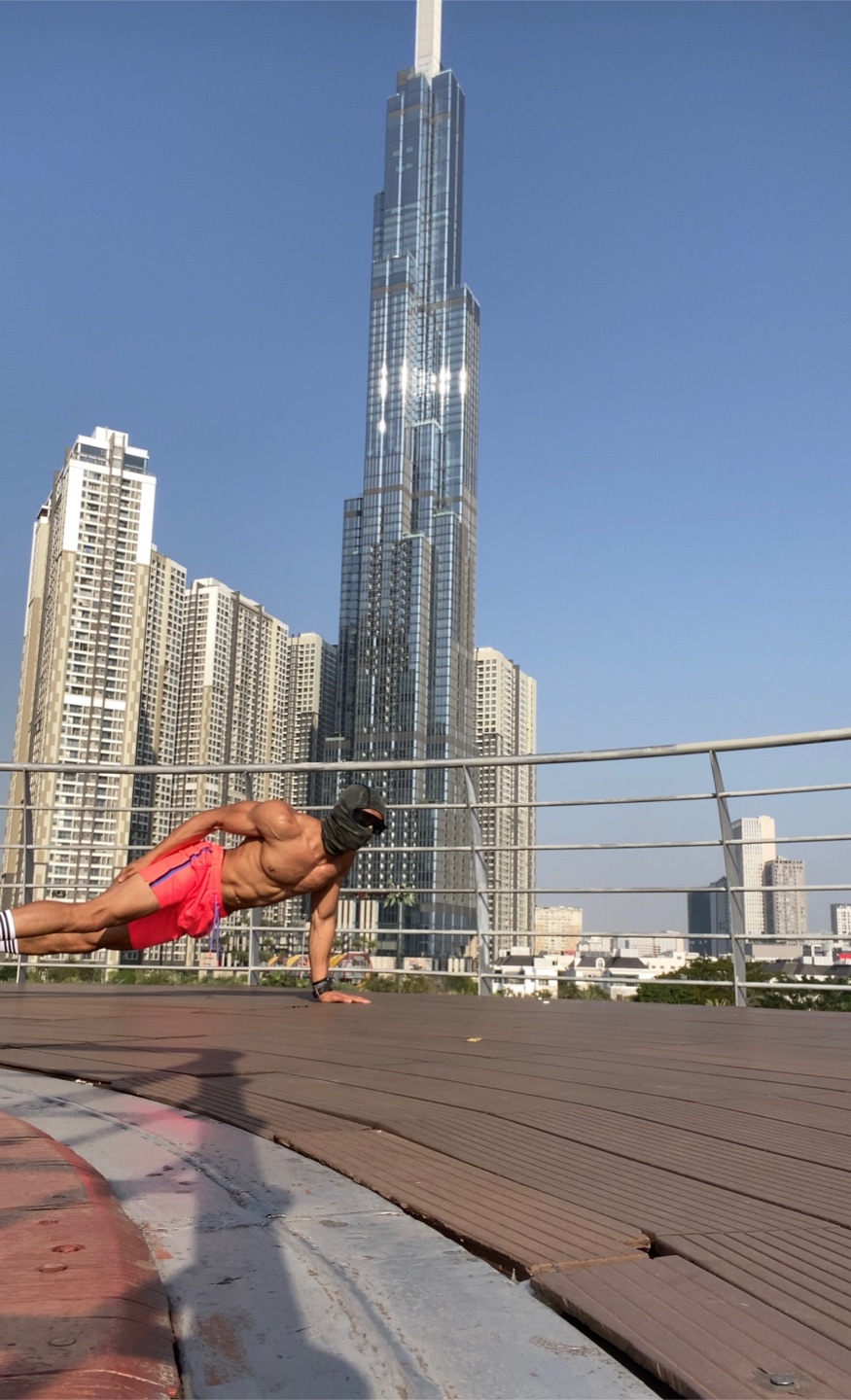
Why static holds
Movement gets the attention, but holding still is harder to fake. A side plank exposes asymmetries immediately: one side shakes sooner, one hip sags lower. Working both sides to equal quality is unglamorous and foundational — it underpins every rope session and every calisthenics set that follows.
Photographs as logs
Each hold gets photographed. Same position, varied skylines. Over time the images function as records: posture sharpens, endurance extends, and the background dates each entry without needing a caption. The archive becomes the progress journal — no spreadsheets required.
Skyline as reference point
Filming against buildings does more than look good. Fixed vertical lines make sag visible: if the hip drops, the tower behind it shows the angle instantly. The city doubles as a plumb line.
Where it sits in the week
Plank work lands on lighter days, after rope or alongside easy stretching. Static holds raise core tension without adding fatigue, which is exactly what a recovery slot calls for — stimulus that does not tax tomorrow's session.
Measurable stillness
The phrase sounds contradictory until the photo trail accumulates. Longer, steadier holds. Straighter lines. Fewer corrections needed mid-hold. Nothing about it is dramatic, and that is the point: quiet, verifiable progress, one held breath at a time.
Stillness is the hardest thing to fake on camera, so it gets logged.